
API 653 Tank Inspection, Due Date to Done
Externals, internals, floor condition and settlement — inspection and NDT from one Alberta crew.
API 653 Aboveground Storage Tank Inspection
API 653 governs the inspection, repair and alteration of aboveground storage tanks in service — and its deadlines have a way of arriving faster than internal entry can be planned. CIC provides API 653 inspection across Alberta: routine and formal externals, out-of-service internal inspections, floor and shell condition assessment, and the NDT data that turns findings into a repair scope or a clean next interval.
External and In-Service Inspection
Formal external inspections evaluate shell condition, foundation and settlement indicators, roof and appurtenances, coating breakdown and corrosion — without taking the tank out of service. Shell thickness readings by UT establish corrosion rates that drive both the shell's remaining life and, critically, when the tank must come down for internal inspection.
Out-of-Service Internal Inspection
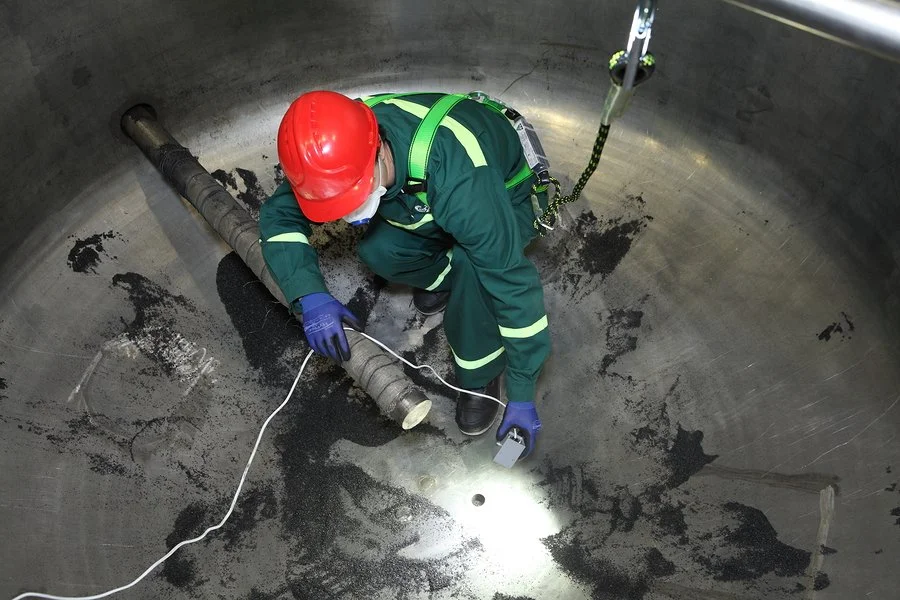
The internal is where a tank's real condition shows: floor plate corrosion (product side and soil side), weld condition, pitting, lining breakdown, shell-to-floor corner details, and settlement effects visible only from inside. CIC coordinates inspection and NDT scopes against your cleaning and ventilation schedule, so the expensive out-of-service window produces a complete condition picture the first time — floor condition assessment, targeted thickness surveys, and weld examination where product-side history demands it.
Findings You Can Act On
An API 653 report should end arguments, not start them: corrosion rates by course, floor condition mapped, minimum thickness comparisons, settlement data against tolerances, and repair recommendations tied to the standard's criteria. Because the inspection and the NDT come from one company, no finding dangles on a subcontractor's pending report — the data and the disposition arrive together.
Frequently Asked Questions
How often do storage tanks need API 653 inspection?
Routine in-service externals run on short cycles (monthly-style walkdowns by owner staff), formal external inspections typically at five-year intervals, and internal inspections at intervals set by floor corrosion rates — commonly ten years initially, extendable or shortened by the data. Your corrosion rates, not the calendar alone, drive the internal date.
Does the tank have to come out of service?
Not for external and shell-thickness work — those run with the tank live. Internal floor inspection requires cleaning and entry, which is why the interval math matters: good external data and defensible corrosion rates keep tanks in service until an internal is genuinely due, not just calendar-due.
Can CIC handle the NDT scope during our tank outage?
Yes — thickness surveys, floor condition assessment, weld examination (MPI, LPI, UT or vacuum-box support as scoped) and the formal API 653 inspection run as one coordinated crew inside your outage window. Call 780-468-4593 before the tank comes down and we'll plan the window together.