
Magnetic Particle Inspection for Welds
That Have to Hold
Surface and near-surface crack detection in ferromagnetic steel — CGSB certified, shop or field.
Magnetic Particle Inspection (MPI) Services
Magnetic particle inspection detects surface and slightly subsurface defects — cracks, laps, seams, lack of fusion — in ferromagnetic materials like carbon steel and low-alloy steel. CIC's CGSB certified technicians perform MPI on structural welds, castings, forgings, and lifting components throughout Alberta, in the shop or on site.
How MPI Finds Defects
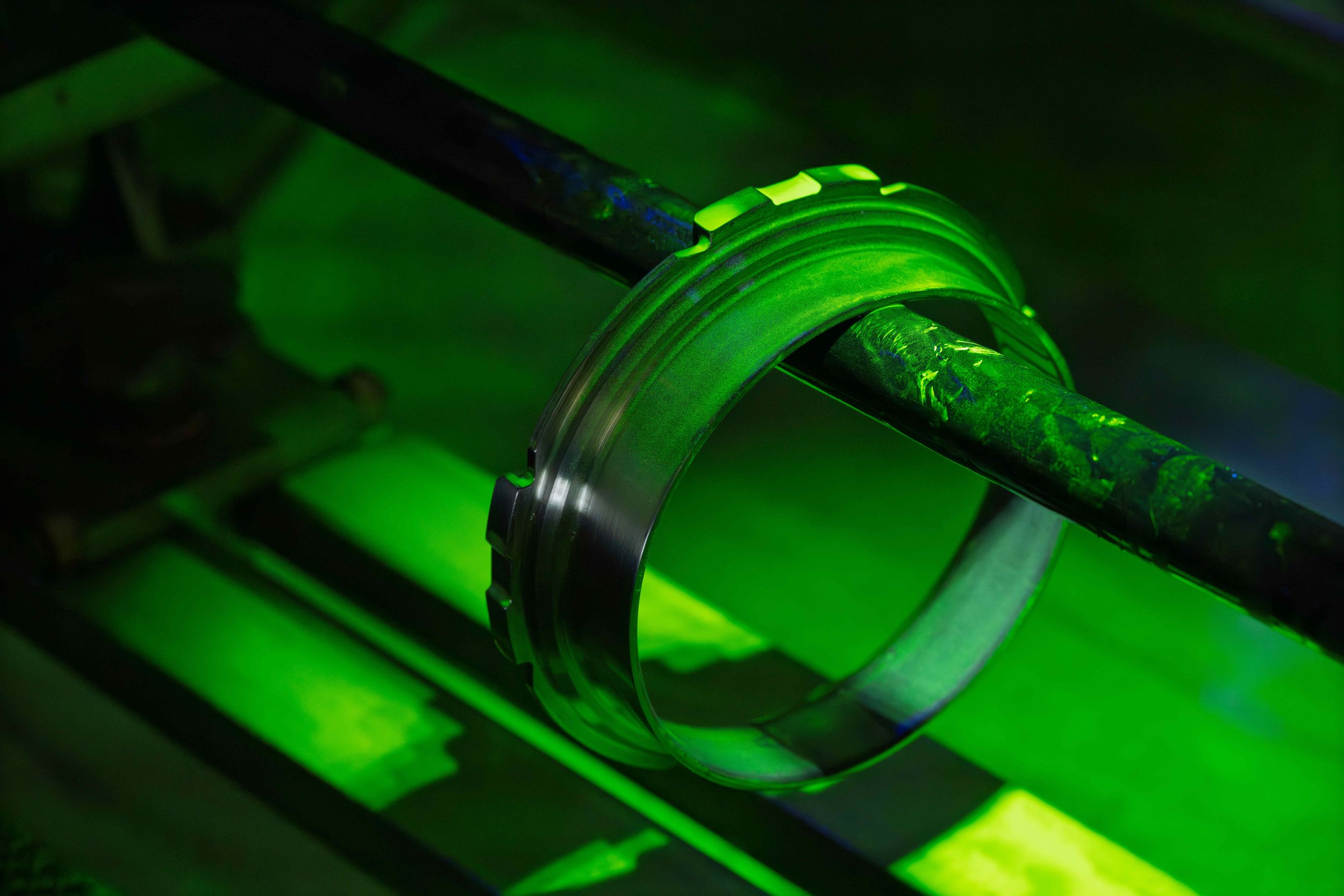
The part is magnetized; any discontinuity at or near the surface distorts the magnetic field and creates a flux leakage point. Fine magnetic particles applied to the surface gather at that leakage and draw a visible outline of the defect. It's fast, sensitive on ferromagnetic steel, and reveals tight fatigue and toe cracks that visual inspection misses.
Wet Fluorescent vs. Dry Powder Methods
Dry powder MPI with a portable yoke is the workhorse for field weld inspection and structural steel — quick setup, works on rough surfaces. Wet fluorescent MPI, applied as a UV-viewed bath or spray, delivers maximum sensitivity for machined components, shafts, and critical lifting gear. CIC runs both, and your acceptance criteria dictate the technique, field strength, and lighting we use.
Where MPI Earns Its Keep
Structural steel welds to CSA W59 acceptance criteria — beams, connections, splices
Pressure piping and vessel welds as the surface method paired with volumetric UT or RT
Crane hooks, spreader bars, lifting lugs and rigging hardware on recurring inspection cycles
Castings, forgings, and machined shafts where fatigue cracking is the failure mode
MPI or LPI? Choosing the Right Surface Method
If the material is ferromagnetic, MPI is usually the better surface method — it's faster, tolerates thin coatings, and catches slightly subsurface defects LPI cannot. If the material is stainless, aluminum or another non-magnetic alloy, MPI won't work and liquid penetrant inspection is the correct call. We'll confirm the right method from your material specs before quoting.
Certified Process, Documented Results
Every MPI job runs to a written procedure — magnetization technique, field verification, particle type, lighting — with interpretation by CGSB certified personnel and a signed report against your code: ASME Section V, ASTM E709 methodology, CSA W59 or your project spec. As an independent NDT company, our disposition is the same whether the weld passes or fails.
Frequently Asked Questions
What defects can magnetic particle inspection find?
MPI detects surface-breaking and near-surface defects in ferromagnetic steel: fatigue cracks, weld toe cracks, laps, seams, and lack of fusion. It cannot find deep internal defects — that requires ultrasonic or radiographic testing — and it doesn't work on non-magnetic materials.
Does MPI work through paint or coatings?
Thin, well-bonded coatings up to roughly a few mils are generally acceptable with yoke techniques when demonstrated; thick or flaking coatings must be removed. Your governing code sets the limit — we verify coating thickness and field strength before inspecting rather than guessing.
Can CIC do MPI at our site?
Yes. Portable yokes and field kits mobilize to fabrication shops, plants and construction sites across Alberta, with our Edmonton facility handling components you'd rather ship in. Call 780-468-4593 to schedule.