
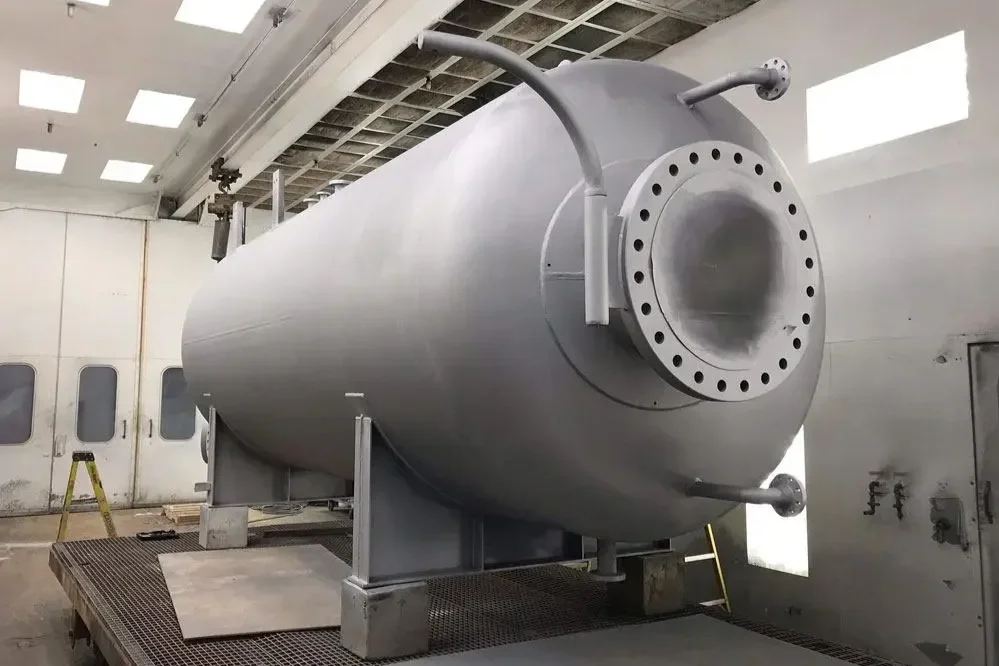
API 510 Vessel Inspection With the NDT Behind It
Internals, externals and thickness programs — inspection and testing from one company, one report.
API 510 Pressure Vessel Inspection Services
API 510 governs the in-service life of pressure vessels — inspection intervals, corrosion rate tracking, remaining-life calculations, and the evaluation of repairs and alterations. CIC provides API 510 inspection across Alberta backed by the thing most inspection-only firms have to subcontract: the full NDT toolbox that vessel inspection actually runs on.
What Our API 510 Scope Covers
External inspections — shell, heads, nozzles, supports, insulation condition and CUI susceptibility screening
Internal inspections — corrosion, cracking, lining and internals condition at manway entry
On-stream thickness programs — UT at established CMLs, corrosion rates and remaining-life updates
Damage-mechanism-driven NDT — PAUT, TOFD, MPI or RT deployed where the vessel's service history says to look
Documentation — findings, corrosion rates, and next-interval recommendations your integrity program can file and act on
Inspection and NDT From One Provider
A vessel inspection is only as good as the testing behind it. When the external walkdown flags a suspect nozzle weld, CIC's own technicians scan it — same visit, same report — instead of a second mobilization from a second vendor. On turnarounds, that integration compresses schedule; on run-and-maintain work, it means one accountable signature over both the inspection and the data.
Working Inside Alberta's Regulatory Frame
Pressure equipment in Alberta operates under the province's safety codes regime administered by ABSA, with owner-user integrity programs carrying defined inspection obligations. CIC's API 510 inspection services support those programs — supplying certified inspection, the NDT data behind it, and documentation structured so your chief inspector and your program audits stay clean. Tell us how your program is structured and we'll fit it.
Frequently Asked Questions
How often do pressure vessels need API 510 inspection?
Intervals are set by the vessel's corrosion rate and service: external inspections typically run on a five-year cycle, while internal or on-stream inspection intervals derive from remaining-life calculations, commonly capped at ten years. Your program documents govern — we calculate and recommend, your program sets the date.
Can inspection happen without opening the vessel?
Often, yes. Where service history and code provisions allow, on-stream inspection using external UT, PAUT and other NDT can substitute for internal entry — avoiding blinding, cleaning and confined-space costs. Whether your vessel qualifies depends on its damage mechanisms and history; that's a records conversation we're glad to have.
Do you inspect during turnarounds?
Yes — vessel lists, inspection crews and NDT support are planned against your turnaround schedule, with findings reported as covers come off so repair decisions don't wait. Call 780-468-4593 with your outage window.