
Portable Hardness Testing Where
the Weld Lives
PWHT verification, sour-service limits and heat-treat QA — field readings your engineer can defend.
Portable Hardness Testing Services
Portable hardness testing verifies that a weld or component's mechanical condition matches its paperwork — that PWHT actually softened the heat-affected zone, that sour-service hardness limits are met, that the delivered material saw the heat treatment its MTR claims. CIC runs portable hardness surveys across Alberta and backs them with bench testing in our Edmonton metallurgical lab.
Where Hardness Numbers Decide Outcomes
PWHT verification — confirming post-weld heat treatment achieved required softening before a circuit goes back in service
Sour service compliance — hardness limits in H2S environments (per NACE MR0175 / ISO 15156 requirements in your spec)
Heat-treat QA — verifying quench-and-temper or annealed condition on incoming material and machined components
Weld procedure support — HAZ hardness traverses feeding procedure qualification in our lab
Failure investigation — hardness mapping as evidence when something already broke
Field Methods Matched to the Job
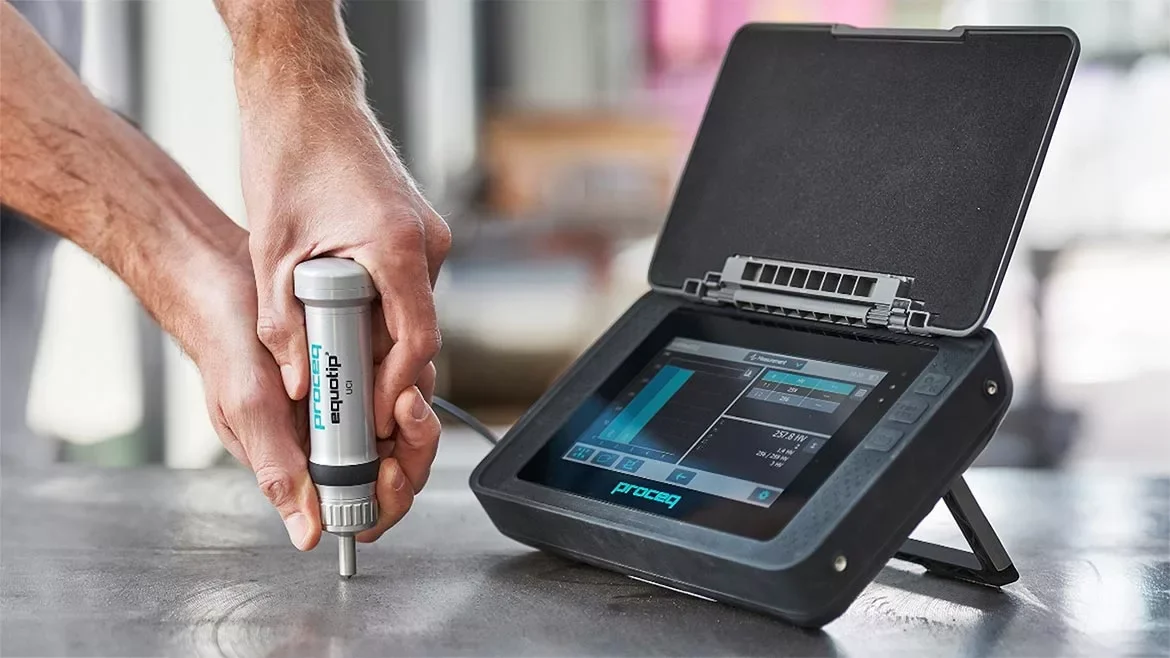
Portable hardness isn't one instrument. Rebound (Leeb) testing is fast and forgiving on heavy sections; UCI reads welds and HAZ zones with a fine footprint; portable Brinell provides the comparison bar the oldest specs still call for. Surface prep, part mass and geometry decide which method produces a defensible number — our technicians choose accordingly and document the method with every reading.
Field Readings, Lab Confirmation
Portable readings answer most questions; disputes and critical calls deserve bench verification. Because CIC operates its own metallurgical lab, a questioned field number can be settled with laboratory hardness testing on a sample — one company, one chain of custody, one answer. That backstop is what separates a hardness survey you can file from one you can defend.
Frequently Asked Questions
Why does hardness matter in sour service?
Hard microstructures crack in H2S environments — sulfide stress cracking targets high-hardness welds and HAZs. Specs derived from NACE MR0175 set hardness ceilings; portable testing verifies welds meet them before hydrocarbons ever touch the steel.
How accurate is portable hardness testing?
Accurate enough to make code decisions when method, surface prep and part geometry are matched properly — and misleading when they aren't. That's why our reports record method, conversion standard and prep condition for every location, and why disputed readings escalate to our lab.
Can you test welds in place?
Yes — in-situ weld cap and HAZ readings on piping, vessels and structures are the core use case, including post-PWHT verification during turnarounds.
Call 780-468-4593 to schedule field crews.