
Every Tube. Every Flaw. No Guessing.
Eddy current inspection for tube bundles and surface flaws — fast, couplant-free, and reported tube by tube.
Eddy Current Testing (ET)
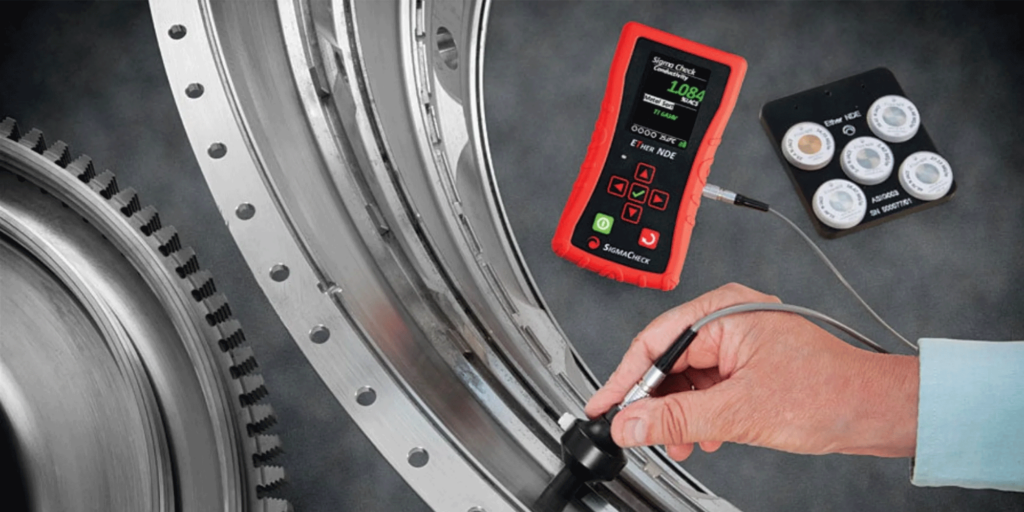
Eddy current testing finds surface and near-surface flaws by inducing electromagnetic currents in conductive material and reading the disturbance a defect creates — no couplant, no surface prep beyond clean, and it works straight through paint and coatings. CIC provides CGSB-certified eddy current inspection for Alberta plants, shops and sites, from single components to full tube bundles.
Heat Exchanger & Condenser Tube Inspection
Tube inspection is where ET earns its reputation: a probe travels each tube and maps wall loss, pitting, cracking and support-wear from the inside, at production speed. CIC inspects heat exchanger, condenser and chiller bundles during turnarounds and outages, and reports tube by tube — which tubes are clean, which are degrading and at what percentage, which get plugged — so the bundle decision is an engineering call, not a coin flip.
Surface Inspection Through Coatings
On welds and components, ET detects surface-breaking cracks through paint and thin coatings that would have to be stripped for MPI or PT — which makes it the method of choice for coated structures, in-service welds and painted equipment where blasting the coating off costs more than the inspection. It also handles non-ferromagnetic materials — stainless, aluminum, copper alloys — where magnetic particle can't play.
Where ET Fits Among the Methods
Every method has a lane. MPI is fast on bare ferromagnetic welds; PT works on anything but needs the coating off; UT sees depth. ET's lane is conductive materials, coated surfaces and tubing — and part of doing this job honestly is telling you when your problem belongs to a different lane. Work is performed to ASME Section V practice by CGSB-certified technicians, in the field or in the shop.
Planning a turnaround with bundles to disposition — or a coated weld you'd rather not strip? 780-468-4593, or request a quote online.
Frequently Asked Questions
What is eddy current testing?
Eddy current testing is an electromagnetic NDT method: a coil induces currents in conductive material, and flaws — cracks, pitting, wall loss — disturb those currents in ways the instrument measures. It needs no couplant, works through paint, and inspects tubing from the inside at high speed.
What can eddy current find that other methods can't?
Three things, practically: flaws under paint and coatings without stripping them; cracks in non-magnetic materials like stainless and aluminum where MPI doesn't work; and internal degradation across thousands of heat exchanger tubes at a speed no other method matches.
How is a tube bundle inspection reported?
Tube by tube: each tube's condition, defect type and estimated wall loss percentage, mapped to the tube sheet so plugging decisions are exact. You get the data behind the disposition, not just a verdict — which is what the turnaround engineer actually needs.